
Additive Manufacturing Europe Takes Steps Toward Industrialization of Prosumer 3D Printing

Industrialization of Prosumer 3D Printing

The first Additive Manufacturing Europe show, which took place in Amsterdam from June 28th to the 30th and was sponsored by SmarTech Publishing — was tasked with the daunting challenge of helping the low-cost desktop 3D printing industry that it so well represented during the 3D Printshow years into a real and professional industry for accessible proto-typing and small series production. Led by Ultimaker and Zortrax the show and the industry now seem ready to enter into this new phase.

Ultimaker Takes the Lead

As anticipated by SmarTech Publishing in the recent Opportunities in Low-Cost 3D Printers: Technologies, Materials and Markets – 2016 report, Ultimaker has taken a leading role in the industry, successfully leveraging on the difficulties encountered by previous market leader MakerBot (not present with a booth at the show). Ultimaker CEO Jos Burger explicitly confirmed this to SmarTech Publishing stating that “we believe we are now market leader in the $2,000 to $5,000 segment”. Burger also added that, although Ultimaker believe they are currently number one, they have no particular in-terest in being alone, welcoming valid competition in order to help build the industry together.
Industrialization of Prosumer 3D Printing

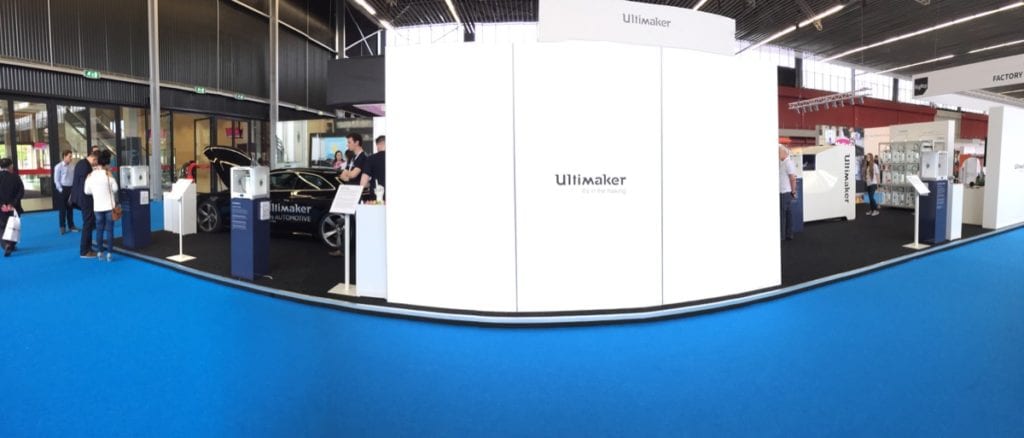
Ultimaker’s large stand showed that the Dutch company is now ready to lead the desktop 3D printing market with solid international structure.

Joining Ultimaker two years ago, Mr. Burger helped the company shift from being a successful startup to a small multinational enterprise, building up to 210 employees globally and a strong presence in both Europe and North America (with a close eye on the APEC market). This is the way other desktop 3D printer manufacturers must follow and, although it is certainly leading, the AM Europe show demonstrated that Ultimaker is also not alone. Poland based Zortrax also was present with a large booth representing the success of its retail efforts over the past two years.

Prosumer Segment Heading Toward Industrialization

SmarTech Publishing is seeing other smaller companies such as Italy based Sharebot and WASP or Latvia based Mass Portal showed that they are investing in technological advancements that can help move the market in new directions. WASP presented a 3 meter tall multi-tool capable machine that can print directly from granules for cost optimization; Sharebot was present with a new version of its prosumer grade $9,000 DLP Voyager 3D printer integrating continuous DLP (C-DLP) for ultra-fast 3D printing. Mass Portal presented a new set of internally developed nozzles which enable its Delta architecture filament extrusion 3D printer to achieve resolutions comparable to high-end SLA.
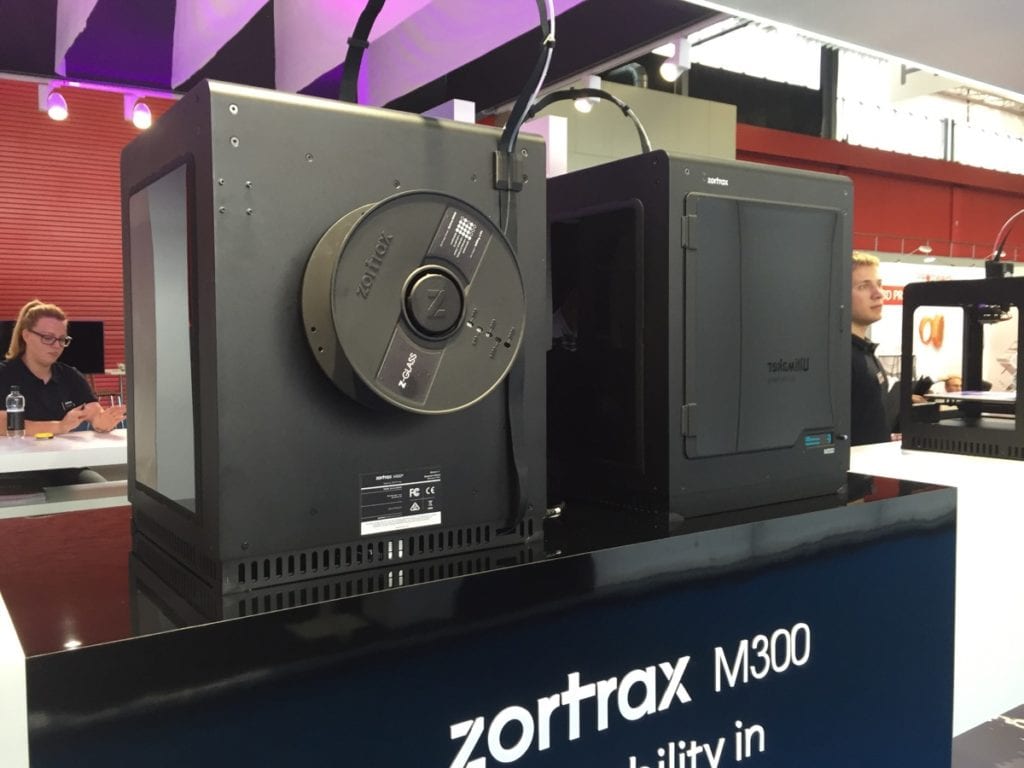
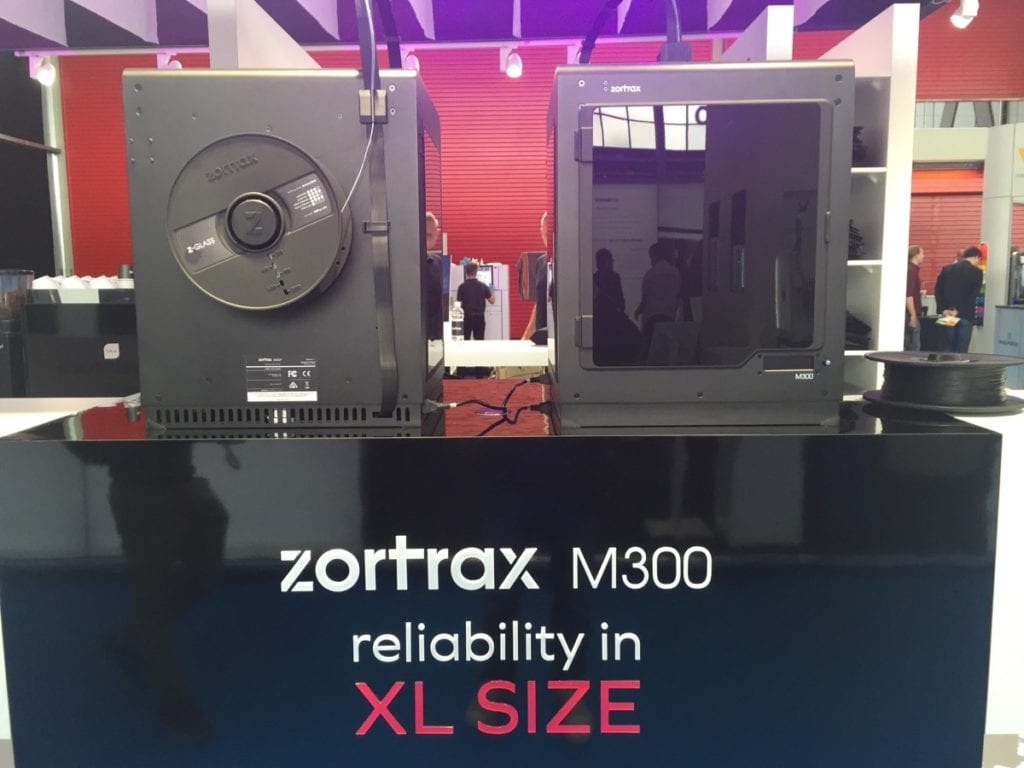
Zortrax welcomed the prosumer challenge by releasing its new $5,000 M300 system.

In fact the first edition of the show also confirmed another one of SmarTech’s assessments for desktop 3D printing and specifically that the most valuable segment for future growth in this area is the prosumer segment. This is the range from above $5,000 to below $10,000. Zortrax, more aggressively than most other companies, is now finally targeting this area of development by choosing the AM Show Europe show as the venue for the announcement of its new M300 3D printer. This is a new system, very similar to the highly successful M200 but significantly larger, enabling a much wider range of applications.

Finding that Magic Price Point

Zortrax thus departed from the yet unreleased Inventure project for a smaller, consumer-focused desktop 3D printer. The Polish company listened to the market’s demands for a more prosumer-focused system and addressed them with a 3D printer that will be priced at around $5,000 (a significant departure from the current sub-$2000 price tag of the M200). The inverse trend (also described by SmarTech Publishing’s report) is also taking place, with more expensive technologies beginning to become more accessible in lower priced systems.
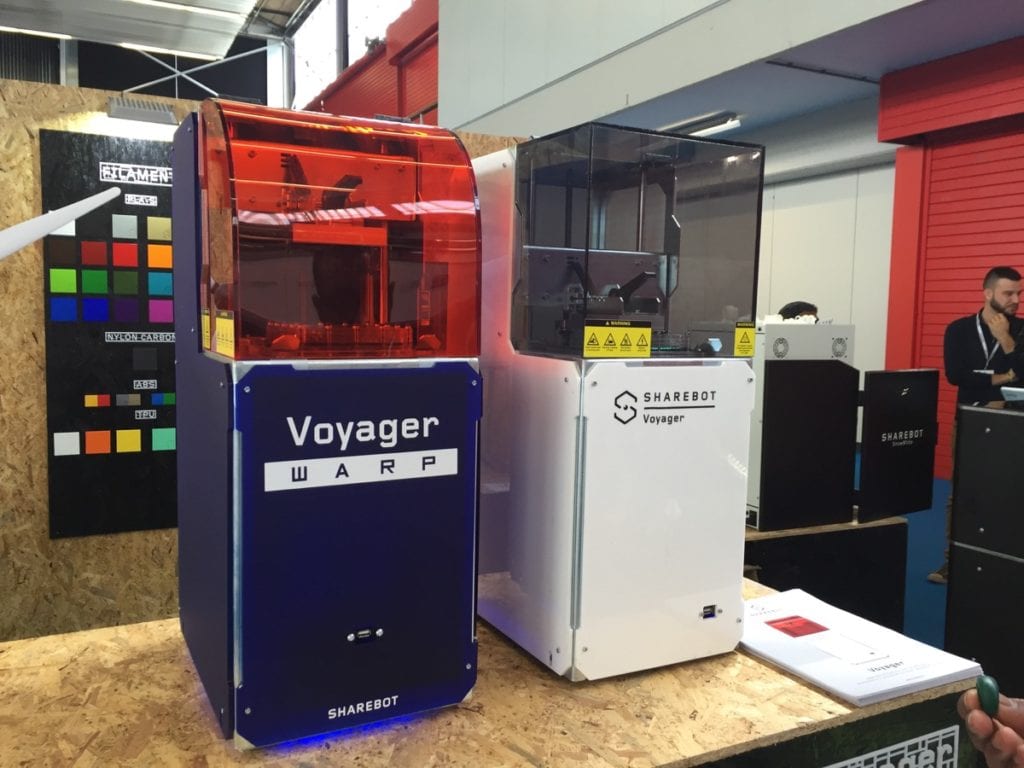
With its new Voyager WARP continuous DLP system, Sharebot leads the charge of the smaller companies bringing high-end 3D printing technologies into a low-cost, prosumer accessible range.

Sharebot is a clear example with the above mentioned Voyager WARP introducing low-cost continuous DLP and doing what its SnowWhite system is doing for low cost SLS. Other noticeable examples were 3Dee’s $20,000 full color binder jetting system from 3DPandora and South Korea based Rokit’s$20,000 dual extrusion bioprinter.

While we saw other interesting companies present with newly engineered system and materials, the Additive Manufacturing Show transition toward a more industry-centered approach is still only at the beginning, which means not many companies – other than EnvisionTec and Prodways – were present from the market’s high-end segment of 3D printer manufacturing. However it did set a solid foundation on which to build for the upcoming Additive Manufacturing Americas show in Pasadena next December and a great reason to return to Amsterdam in 2017.
Additive Manufacturing Europe Sets Stage for Big Prosumer 3D Printing Announcements

Although still in its first edition, the Additive Manufacturing Europe Show in Amsterdam (sponsored by SmarTech Publishing) presented higher number of new product launches than most shows, as Poland-based Zortrax mode the loudest noise with its M300 and sev-eral other companies following closely behind

While RAPID in the US and formnext in Germany have been shaping up as the ideal sce-narios for new announcements in high-end AM applications and systems, the Additive Manufacturing Europe show in Amsterdam we believe will establish a leadership role in presenting new innovation from the low-cost 3D printing segment, as it transitions toward more prosumer and even low-end industrial applications and technologies. It is not an easy transition although it is a necessary one.

Thinking Bigger

AM Europe Prosumer 3dp

Zortrax chose the AM Europe Show to launch its larger model M300 

We thought that Zortrax showed that it is now thinking big, or at least bigger, with the new M300. The company did exactly what the market asked, departing from the illusion of plug & play, consumer 3D printing and heading toward expanding the possibilities of low-cost prototyping and short series manufacturing. This can now be implemented on its larger ma-chine, while relying on the consolidated Zortrax extrusion process and materials. The M300 has a build volume that is almost four times as large as the M200 (27,000 cc Vs 7,200 cc), with a price that is likely to be just about 2.5 times higher.

Ultimaker is also thinking big, although in a different sense. The company did state that they are working on new systems, however at this time it is focusing primarily on building up its global sales infrastructure, consolidating its presence in Europe and the US, while keeping an eye put for the Asia Pacific markets, where its brand is gaining strength and recognizability. Ultimaker presented its 3D printer farm system, replicating the “MakerBot Innovation Centers” on one of the most successful applications introduced by former mar-ket leader MakerBot focusing on education and the professional segment.

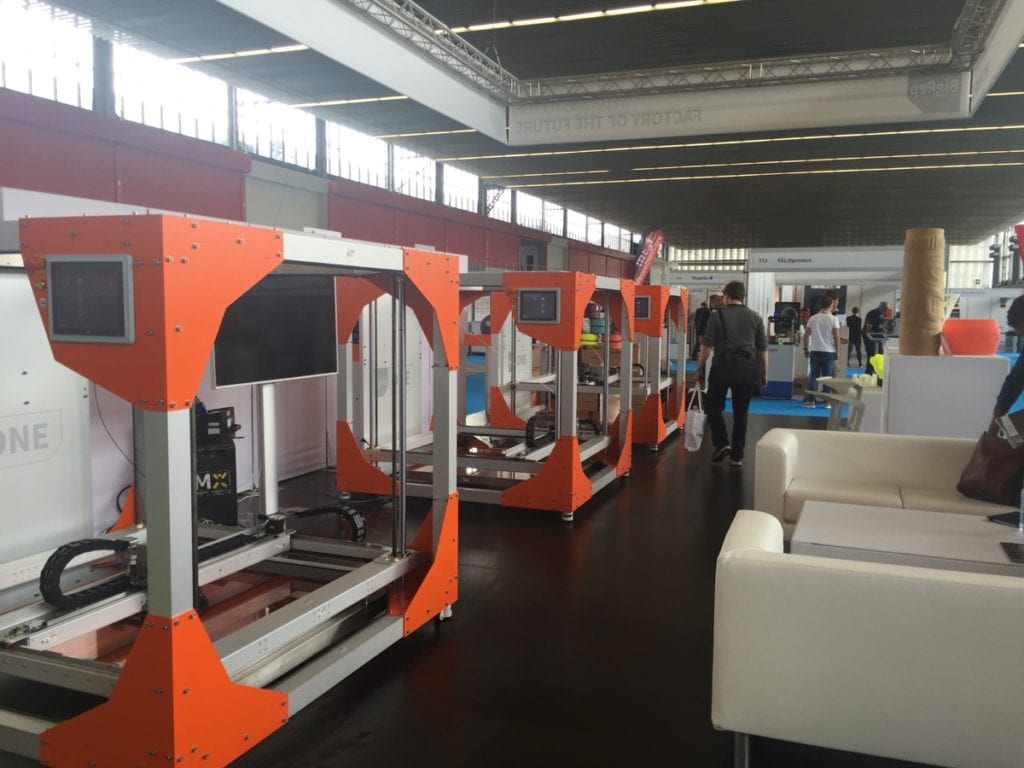
The BigRep booth showed a healthy company to years on, in spite of initial skepticism

When discussing big size 3D printing we at SmarTech Publishing think of BigRep, the German company that first began to industrialize a low cost, large size system based on a cartesian architecture, in spite of general skepticism. Although it did not make announce-ments on new products BigRep was present at the show with a large stand which seems to indicate that the company is also building a solid commercial base. Others are following in this direction with distributor AMR Europe going as far as presenting an extra wide system with quadruple extrusion capabilities.

Pricing Smaller

Italy based Sharebot also arrived at the show with an important announcement: its ultra-fast Voyager WARP continuous DLP 3D printer. As many Italian companies, we think Sharebot has had some difficulties in scaling up its international structure however it has not wasted time in innovating. Today it is the only 3D printer manufacturer that has devel-oped low-cost systems based on five different technologies: filament extrusion, laser stere-olithography, digital light stereolithography, continuous digital light stereolithography and plastic powder bed fusion. The real challenge is making sure that these innovations are re-liable enough to really make it into the prosumer and professional segment.

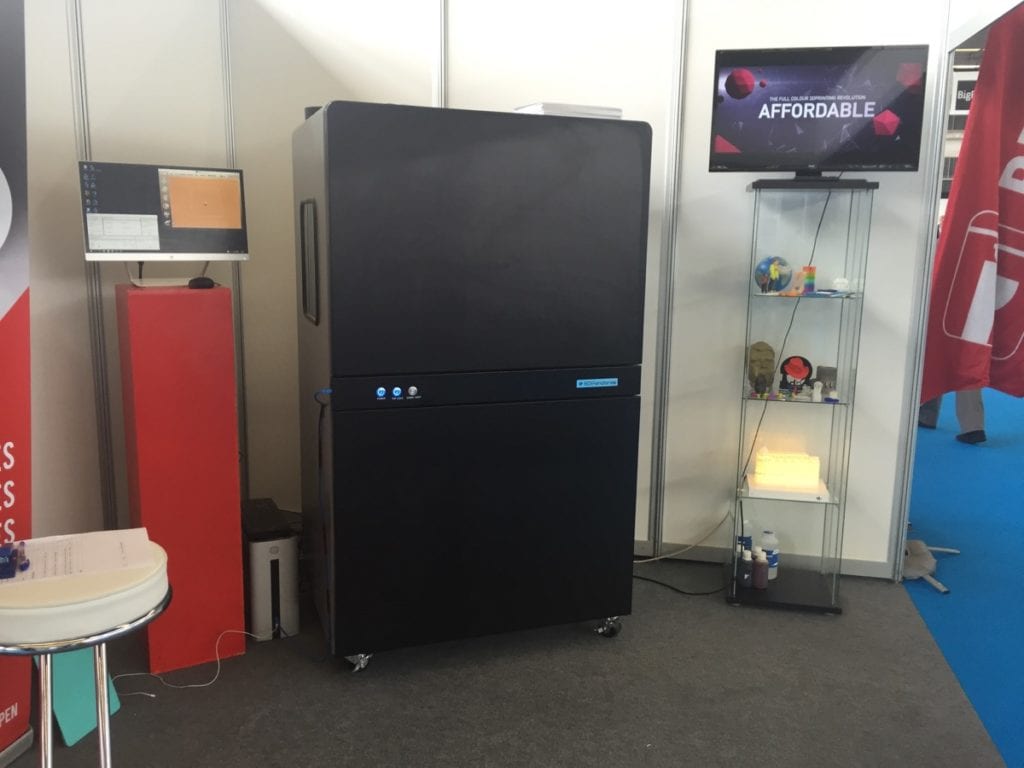
Antwerp-based 3Dee is taking the 3DPandoras full color binder jetting system to the European market for around $20,000

For 3Dee, the Antwerp, Belgium, based 3D print shop, SmarTech Publishing believes the challenge is similar as they seek to bring a low cost full color, gypsum based, binder jetting system to the market. The system developed by Taiwan based 3DPandoras is priced at around $20,000 (about a third of the comparable 3D Systems 660 system) and offers even better surface quality and water resistance. Combined with a more affordable price for ma-terials, the 3DPanodras system could make the already profitable “mini-me” 3D printed sculptures consumer business accessible to a much wider demographic, with the final price of a 15 cm statuette – currently set at around $80 to $100 – dropping below $30.

A similar approach was undertaken by Netherlands Based Seeda, as it brought the Rokit Invivo bioprinter to the European market, pricing it at around €20,000. Produced in South Korea – one of the nations most active in bioprinting, together with the Netherlands – the fully enclosed machine introduces the possibility to print both scaffold and biioink at the same time, specifically for development of transplantable tissue. It odes this through a dual extrusion (extruder and dispenser) system and up to 7 different supported biomaterials (in-cluding collagen, alginates, silk fibroin and hyaluronic acid).

Consuming Opportunities

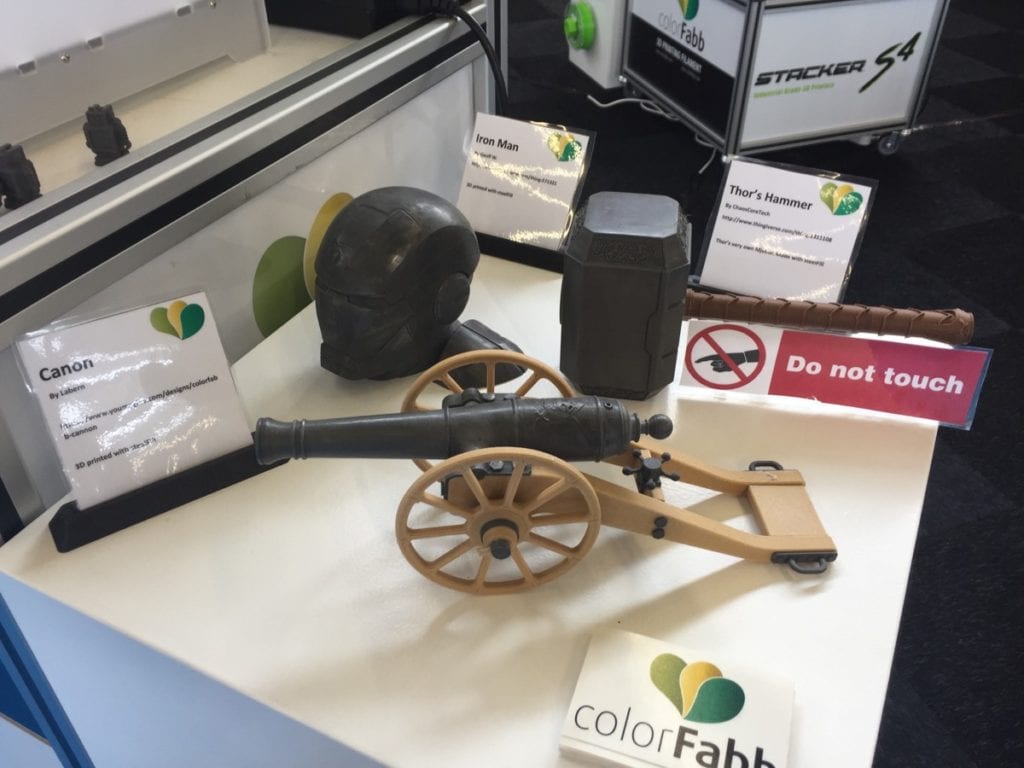
Innovations in 3D printing do not simply concern technology. Many new applications of low cost FDM will be possible thanks to advances in materials and material science. One of the most active companies on this front is colorFabb, which is also one of the most successful 3D printer filament manufacturers worldwide. Available later this year, colorFabb presented its new steelFill filament, an impressively heavy composite material based on steel powder.

Dutch filament manufacturer colorFabb presented a new steel filament showing the market for open materials is just starting

Companies like Advanc3d Materials, a producer of both raw filament and raw SLS powder, as well as new players such as Fiberology (which developed a new type of PLA that gains mechanical strength when heated in an oven) show that the market for open materials is wide open and is only going to get much bigger, something that SmarTech Publishing clearly highlighted in its latest report on the Opportunities in Low-Cost 3D Printers. While growth might not be as steep as that of the 3D Print Show series of event, if these are the premises that Additive Manufacturing Europe is building on, the show organizers can look forward to a lengthy growth cycle ahead.

The Oil and Gas Industry as a New Opportunity for Additive Manufacturing

SmarTech Publishing’s new Additive Manufacturing Opportunities in Oil and Gas Markets report, shows that additive manufacturing (AM) is still at an early stage of adoption in the oil and gas industry, however it also claims that in the near future, all sectors of this industry — upstream, midstream and downstream – is going to benefit from AM.

Oil and gas prices are at record lows and many smaller companies in the industry are struggling, while the larger companies are reported to be considering mergers and drastic staff reductions in order to cut losses and improve gross margins, the latter being the worst they have been in 30 years. In this poor environment SmarTech Publishing believes that AM will prove a very useful tool to cut costs and streamline processes.

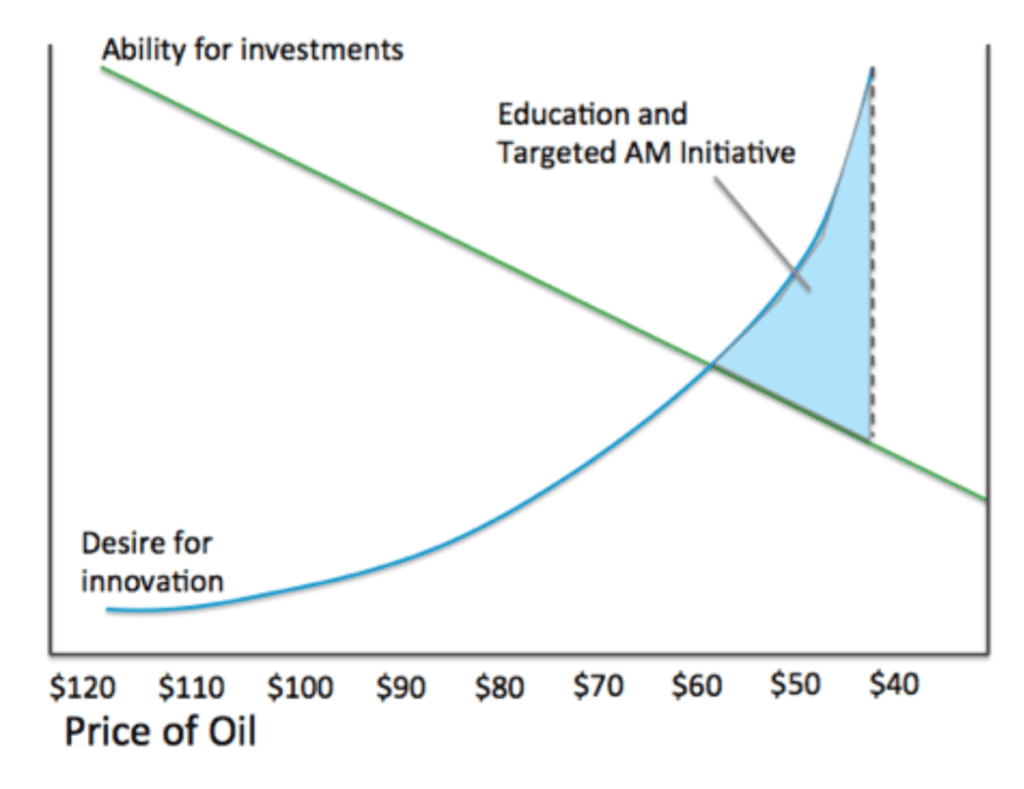
In the past, oil and gas firms have traditionally not invested in advanced manufacturing technologies, even though industry profit margins – around 20% – would have facilitated it.  SmarTech Publishing believes it will be harder now to make that transition and that AM may open a new era of prosperity for some firms in oil and gas.  But in its report, SmarTech Publishinganticipates that falling energy prices and constricted operations due to relatively inflexible cost structure are catalyzing the desire for innovation.

AM Returning Oil and Gas to Prosperity

GE’s oil and gas division has taken up a leadership role in deploying AM processes presumably learning from its already extensive use of AM in its aerospace manufacturing group.  In Italy GE is printing metal end burners for gas turbine combustion chambers as well as nozzles through an automated production line. In India, GE plans to use AM to enable as many as 44,000 fuel nozzles to be manufactured per year. In Japan, GE has been using Mastsuura 3D printing technology to produce control valve parts since early 2015.

While GE is clearly a pioneer in this space, SmarTech Publishing believes that the largest oil and gas giants, the E&P companies, will soon begin to use AM extensively. If energy prices rise again, E&P companies will have an easier time investing in AM.  But even if they do not, they may still have no choice but to invest in AM to streamline processes and cut costs.

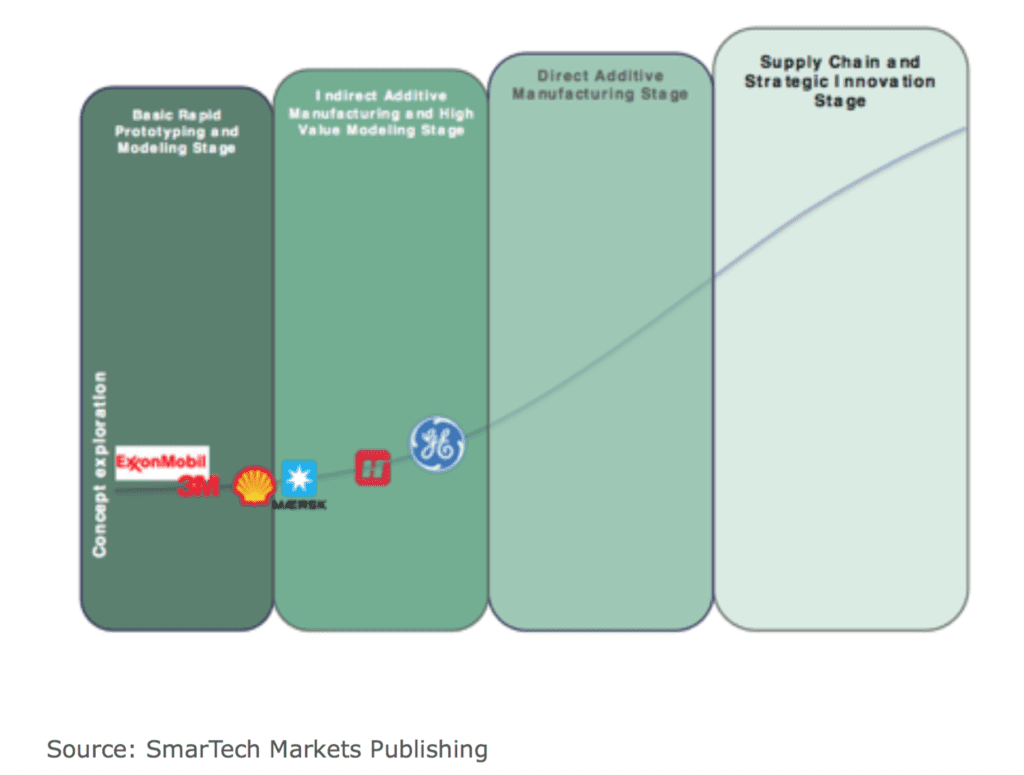
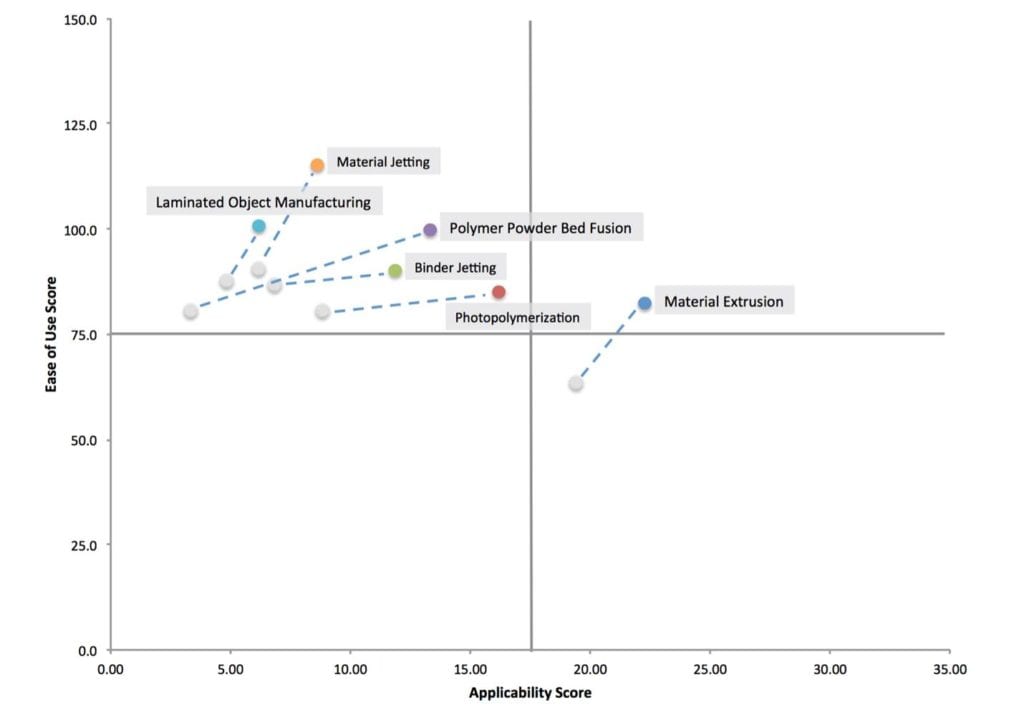
We think that E&P companies will primarily use AM for refining and processing equipment, but also for prototyping and modeling for exploration and operational equipment. Today, however, the oil and gas industry is just beginning with AM adoption.  Even the most advanced adopters of AM still live in earlier stages of the SmarTech Publishing AM adoption model.   (See Exhibit A.)

Exhibit A – Companies Investing

Oil Gas Industry AM

Although, AM could help return the oil and gas industry to prosperity, the industry is quite conservative, which is one reason why the potential of AM has remained largely unexplored Transocean and OneSubSea, two prominent organizations involved in various aspects of subsea oil and gas operations and services, report that they do not believe there is currently significant implementation or investment into advanced or novel manufacturing technologies in the subsea sector.

Likely AM Strategies for AM

Exhibit B shows SmarTech Publishing innovation trajectory in the oil and gas industry.  As we have already noted, we expect the oil and gas industry to learn a lot from what has already been done with AM in the aerospace industry.

These are applications stemming from metal AM, however SmarTech Publishing believes that the Oil & Gas industry also stands to benefit, in the shorter term, from polymer based 3D printing for the production of physical 3D models.  Two examples here to indicate how AM can move beyond aping aerospace:

  • One E&P giant, Shell, has published a successful case study on this type of application.  This covers a polymer 3D printed prototype of the highly complex system that will connect the Floating Production Storage and Offloading (FPSO) vessel of its Stones Project to pipelines from the seabed.
  • Similarly, the implementation of multi-material and multi-color 3D printing technologies could prove invaluable for creating physical representations of three dimensional seismic imaging data, enabling exploration professionals to better communicate across business units and between teams, as well as to more accurately gauge well production potential through physical modeling of the geologic features in the area.

Exhibit B – Willingness To Invest

Oil Gas Industry AM

SmarTech Publishing’s new report details many other opportunities for AM in the oil and gas industry. And for the oil and gas industry to fuel the AM industry’s growth, in the most cost-efficient and sustainable way, is bound to be mutually beneficial.

SmarTech Publishing Opinion: “Prosumer” Machines Drive Market for Low Cost 3D Printers by 59% in 2015

The latest “Opportunities in Low-Cost 3D Printers: Technologies, Materials and Markets 2016” report by SmarTech Publishingindicates that, while low cost 3D printers may not yet ready to cater to consumer demands, they are ideal in addressing internal prototyping and product development demands by companies and professionals. Today, the “desktops” in “desktop 3D printing” (a term that is generally considered to be interchangeable with “personal” and “low-cost” 3D printing) are inside the studios of engineers, architects and medical professionals, rather than those inside the consumers’ homes.

Enter the Prosumers

This has resulted in the development of the new “prosumer” market segment, which includes low-cost systems positioned slightly beyond $5,000 (a price-point which has defined low-cost and personal 3D printing in the first few years of its expansion, primarily within maker and artisan communities).

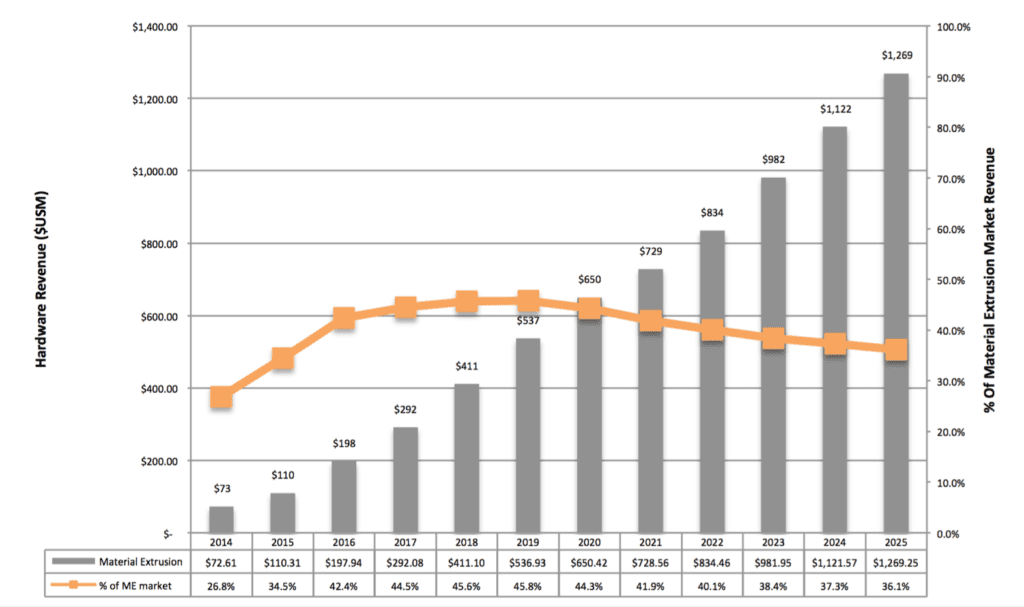
These prosumer 3D printers are, by and large (92%), based on thermoplastic material extrusion technology, even though they are now beginning to include a selection of low-cost photolymerization based systems (8%). Although still very small, the low-cost photopolymerization segment has experienced the most significant growth rate (+116%) in 2015.

Through technological improvements (driven by intense competition) and increased process repeatability, these 3D printers have been able to address the low to medium level prototyping requirements of both small and medium size companies (in some cases even those of large enterprises). They have done this by offering adequate performances at significantly reduced prices, with a widening range of compatible materials.

Although low-cost 3D printing has proven to be more of an option to augment existing business areas (in product design, architecture or basic tooling), rather than a driver for new businesses, SmarTech Publishing does identify one new business segment that has shown a steady overall growth: localized “B2C” (business to consumer) low-cost 3D printing services.

Once again the prime audience for these local businesses is not necessarily the consumer per se, as much as the single professional who has identified a cost-effective use for basic extrusion or photopolymerization 3D printing services. These could be architects and product designers working on personal projects, as well as makers, inventors and educators. The bottom line is that professionals who use CAD software in their line of work are likely to benefit from 3D printing at some point, although not to the point where they would invest in purchasing a personal 3D printer.

SmarTech Publishing does not anticipate – at this point – a future in which 3D printers will be owned by a majority of the population as a standard household item, the increased availability of high-performance materials for low-cost 3D printers has been and will continue to enable these local B2C 3D printing services to cater to a growing demand for “lifestyle customization” of consumer products. These include toy robot, drones and quadcopters, modification or “mods” of technological devices, as well as sporting accessories in a widening range of disciplines.

A Technological Meeting Point

As thermoplastic extrusion 3D printers evolve to meet the demands of professionals (with a consequent rise of the price point to between $5,000 and $10,000) a new range of low-cost photopolymerization-based systems have started to make their way into this new “prosumer” price range. They include Autodesk’s Ember DLP 3D printer and DWS’s Xfab (both priced at just over $5,000), as well as 3D Systems’ Projet 1200 ($4,900) and, in the “original low-cost” (sub-$5,000) range, Formlabs’ Form 2.

Over the course of 2015 and early 2016 a few notable systems based on alternative technologies have also begun to populate the prosumer range. These include mcor Technologies’ ARKe laminated object manufacturing 3D printer (currently the only low-cost system with full color capabilities), and MarkForged Mark One (and Mark Two) for carbon fiber composite manufacturing. Both are priced between $5,000 and $10,000.

While the low-cost 3D printer market is currently almost entirely populated by thermoplastic extrusion systems, However, it is destined to grow to encompass other technologies that are currently only available for professional and industrial grade 3D printing, such as binder jetting and polymer powder bed fusion/sintering.  These are still too expensive to be called low cost – but the trend to lower cost machines using diverse technologies is unmistakable.

The shift has already begun: In 2015 Italy’s Sharebot, Poland’s Sinterit and Switzerland’s Sintratec have presented sub $40,000 SLS systems that are now close to commercialization. The French giant Prodways recently presented its first $100K SLS system (powered by Farsoon technology). On the binder jetting front, China based Addwii has presented a sub $40,000 full color binder jetting system while 3D Systems is still toying with the idea of entering the low cost market with its own market leading technology.

Prosumer Machines Drive Market

All these dynamics may soon live through a significant acceleration with the official market entrance by HP and the IT’s giant stated intention to make 3D printing a strategic priority. Its ultra fast MJF technology is affordable, highly scalable and – together with its open materials policy – may fuel a significant push in product, process and materials innovation. Its effects on the low-cost 3D printing market are not clear at this point but they are going to be closely monitored and will certainly be seen in SmarTech’s future reports.

SmarTech Publishing Opinion: Low Cost 3D Printing Is Alive, Healthy but Following New Leaders

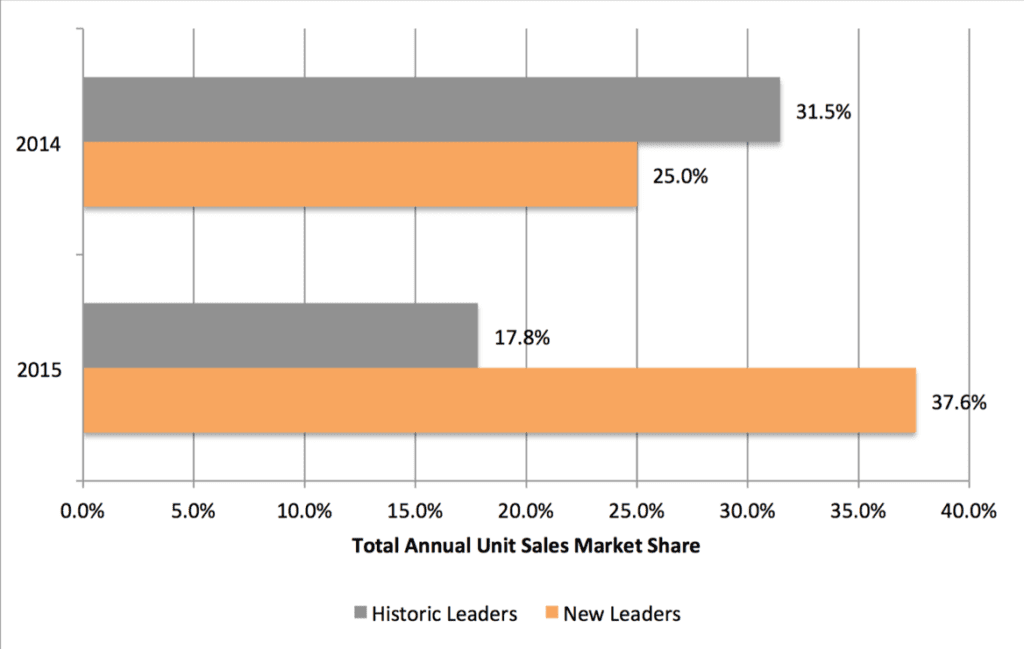
Since 3D Systems pulled out of the consumer market and Stratasys moved MakerBot production to Asia, a new “pack” of low cost 3D printing market leaders has succeeded by successfully catering to the needs of “prosumers” and enterprise level adopters. The latest report “Opportunities in Low Cost 3D Printers: Technologies, Materials and Markets 2016” from SmarTech Publishing identifies who these companies are and why they have been able to succeed where larger ones have failed.

Mistakes Made

SmarTech Publishing believes that the main reason why the low cost 3D printing market has been described by the mainstream business and investment media as “in shambles and doomed”, is that the three major investors in the adoption of consumer 3D printing – industry leaders Stratasys and 3D Systems, along with China-based Tiertime (PP3DP) – have registered substantial losses in their consumer divisions during the course of 2015 and generally fell short of meeting sales targets.

Low-Cost 3D Printing

This has resulted in a general shift in policies, with the extreme case of 3D Systems pulling entirely out of its Cubify consumer 3D printing push. This does not mean that 3D Systems has entirely quit the low cost 3D printing segment. Its Cube Pro filament extrusion 3D printer is still on the market and is one among a selected few that can proficiently offer nylon 3D printing capabilities, something that is very well received by professional and SME’s.

Stratasys pulled the plug on its US-based (Brooklyn, NY) MakerBot operations as it subcontracted out manufacturing of its entire MakerBot range. The only exception to such cutbacks is Tiertime, which has responded to challenge in the consumer areas by focusing more heavily on it and releasing a more consumer-ready platform (the UP Mini 2) to its UP line of low cost desktop 3D printing systems.

Coming from a strictly professional experience in the manufacturing sector, both 3D Systems and Stratasys also made some errors in their strategy to address consumers, demonstrating a lack of understanding of low cost 3D printing dynamics and of consumer technology markets in general.

Seeking to implement an Apple-like business model, both companies sought to capitalize on the hype by offering systems with prices driven up by complex engineering and electronics, finalized in elegant design and ease of use. At the same time, they limited experimentation and modifications by implementing a partially or entirely closed materials and software system.

In the end both of these approaches made the systems more difficult to operate instead of easier, with MakerBot’s Smart Extruder common malfunctions being the most representative icon of this trend. Both approaches also proved to be strategically wrong, as desktop 3D printer adopters – both professionals and Makers – valued materials selection, affordability and reliability more than plug & play functionalities and aesthetics.

Enter Next Gen Leaders

But as these first generation low cost 3DP vendors struggle to get their strategies right, SmarTech Publishing reports that, a new generation of industry players has been rising to cater to the real demands of the low cost 3D printing industry.

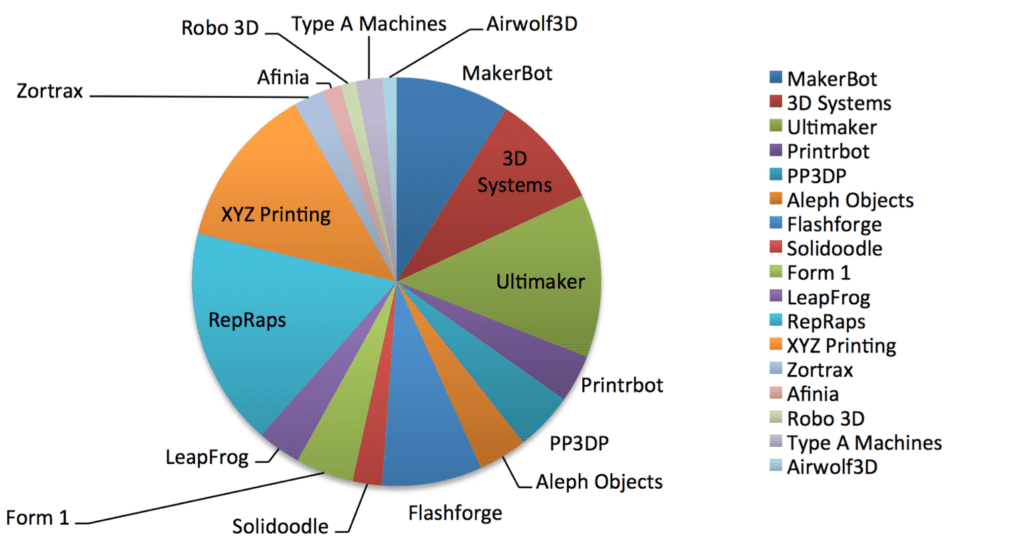
They are led by Netherlands-based Ultimaker. The Dutch company has ultimately picked up the role of market leader in this segment by offering a family of 3D printers that are relatively affordable, sufficiently reliable and able to meet the basic desktop 3D printing demands of both makers and professionals. This has resulted in sales of over 27,000 units in 2015 and a market share of just over 10%.

A similar success has been enjoyed by Taiwan based XYZ Printing. Instead of a relatively pricey and stylish 3D printer with open materials like Ultimaker, it XYZ focused on an ultra-low cost machine (sub $1,000) with a closed materials system. A number of other companies has followed suite, offering even better performances in terms of reliability and materials compatibility, at a price below, or just over, $5,000.

In the opinion of SmarTech Publishing, the reason why a perceived market failure by large industrial manufacturers has turned into a huge market success for new companies is easy to understand.  The demand for low cost printers is still too small for large industrial printers firms to make much of a contribution to their revenue goals by focusing on the low cost segment.

This is why 3% market share is a huge success for a company like Aleph Objects (undoubtedly a rising star in the US market) and a 7% market share is a huge failure for 3D Systems. The low cost 3D printing industry belongs to the smaller players for now and the proof is that the market is becoming more fragmented instead of consolidating into the hands of fewer large companies.  However, all of this may change in time – much as it did in the PC market.  But that change is not likely to occur for a while

In fact, along with Ultimaker there were a number of smaller low-cost 3DP companies that have experienced double and triple digits growth in 2015. These, as seen above, are mostly manufacturers of thermoplastic extrusion based systems, with a few notable exceptions. With an estimated market share of 1.89% (due to its sales being mainly confined to the European continent in 2015) Poland-based Zortrax has been one of the most successful ones, offering a highly reliable 3D printer at an affordable price (around $2,000) and a partially closed materials system.

Several other brands have also stood out in 2015, including Aleph Objects, Leapfrog, Flashforge, Airwolf3D, TypeA Machines, Afinia, Robo 3D, with some other newer players such as Roboze, Fusion3 ad 3ntr coming in 2016. They were able to successfully cater to professional and prosumer end-users demands. Formlabs is currently the only company offering a phopolymerization-based system in this price category. The former MIT spinout now holds a market share of 3.5% and has sold 9,700 3D printers, which – as the company’s Head of Customer Development & Services, Luke Winston once said, “is very likely to be more than all other SLA 3D printer manufacturers combined”.

A Materials World

According to the SmarTech Publishing report on low cost 3D printers, one of the reasons why this market has remained so vibrant in spite of the many challenges it faced is because of its widespread open materials policy, with significant new business opportunities still expected to present themselves both in the thermoplastic and binder jetting powder markets over the next decade.

In 2015 the market for filaments was estimated to be worth $194 million, up 56% compared to the previous year. With the addition of an estimated $10.2 million from photopolymer 3D printing materials (up 142%), the entire low-cost 3D printing materials market was worth $204 million. It is expected to grow more than twenty-fold to $4.5 billion within the next ten years. Even then the great majority (84%) of low-cost 3D printing materials will be thermoplastic filament based, however binder jetting and thermoplastic powders will begin to represent a more significant share of the pie (2.8% and 3.5% respectively).

Further opportunities will arise for low cost 3D printing both in terms of materials and hardware as more industries become adopters. These include both current adopters, such ad educational institutions, and future high value adopters, including the aerospace and automotive sectors.

A particularly good example of this trend is the recent adoption of Ultimaker 3D printers by IT giant Siemens to create PLA casting molds for the rapid and low-cost casting of stainless steel components.

In time, SmarTech Publishing expects that low cost 3D printers, within the reach of even the smallest of businesses, will unlock similar business model innovations through their ability to allow manufacture of components and prototypes in a scalable and cost effective way without the need for large capital investment. Those companies that will be able to meet this demand are going to be leading the next decade of low cost 3D printing evolution.

Low Cost 3D Printers Are Here to Stay: Those Who Do Not Embrace It, Will Regret It

In 2012, the story went that low cost 3D printers (at the time most were calling these “consumer 3D printers”) would become the next consumer electronic hit, infiltrating homes at first in the developed world and later worldwide, creating a societal revolution with people making things they wanted or needed rather than purchasing them.

Low Cost Printing:  The Truth
Today, the perception — shared by the majority of the media and stakeholders in the 3D printing industry – has gone through a 180 degree shift.  Low cost 3D printers are supposedly doomed to remain a gimmicky plastic widget machine that few will find use for.  And  because consumers don’t know what to do with them, low cost 3D printers are already passé, while professional- and production-grade 3D printing races ahead.

We at SmarTech believe that this newer take on the status of low-cost 3D printing is just as wrong as the earlier one. The current story being told about low-cost 3DP, it seems to us, shares the same shortsighted, emotion driven pitfalls of the popular perception four years ago held.

We think that not only are low cost 3D printers here to stay, but those who do not embrace this reality within the 3D printing industry are likely to regret it.

To show where the low cost 3D printing market is really headed, SmarTech has recently compiled the most in-depth market analysis and forecast for the low cost 3D printing segment currently available.  More details and a full table of contents for this report – Opportunities in Low-Cost 3D Printers:  Technologies, Materials and Markets – 2016 — can be found at https://additivemanufacturingresearch.com/reports/opportunities-in-low-cost-3d-printers-technologies-materials-and-markets-2016/

In this report, we present the truth about low cost 3D printing in a time when a number of influential opinions on the segment have soured.

Why the Low Cost 3D Printer Market will Thrive
The bottom line is that SmarTech believes that the low cost 3D printer market will become the multi-billion dollar market that was once predicted for it, but not by taking the same path as the CD player and iPhone.  Instead, we will see low cost printers taking a
novel three-tiered approach based on bringing value to customers.

Life-style customization:  3D printing isn’t right for everyone –or even most people.  But it is a massively valuable tool for that segment of the populace that are both highly creative and enthusiasts in particular lifestyles.

This may sound like the “maker” movement redux.  But we think that what we are talking about here is a lot bigger than that and is best characterized as life-style customization.  We see this as a more specific version of the mass customization that was talked about a few years back.  SmarTech’s view is that this is what the “real” 3D printing revolution will consist of.

Approaching consumer 3D printers as a tool for customizing a lifestyle is how to sell tens of thousands of printers to those people already invest in activities where 3DP can take that lifestyle to a level not possible in any other way.

PC-like market expansion through low cost 3DP:  Although this was not the intent of the first wave of low cost 3D printer makers, what SmarTech is seeing is a massive upswing in professional customers purchasing low cost printer for distributed prototyping and innovative manufacturing solutions.  For example, Siemens uses Ultimaker 3D printers to cast metal parts with a 3D-printed indirect manufacturing solution.

In much the same way the personal computers broadened the addressable market for computing by orders of magnitude, we see 3D printers doing something similar in the manufacturing sector.  In other words low cost 3D will bring the benefits of flexible, reduced capital production and lead time reduction to a whole new wave of entrepreneurs and R&D teams that will create new business models predicated on additive manufacturing.

Innovative manufacturing solutions:  While the first two factors mentioned above are relatively deterministic and predictable, we also think that the availability of powerful low cost additive manufacturing tools will inspire entirely new applications; ones we have not thought of yet.  Again, this was something that occurred during the “PC revolution.”

Indeed, low cost printers have already shown what is possible through embracing innovation and collaboration in this field. No better example exists here than what can be seen in the market for low cost material extrusion print materials. For over a decade, the only material extrusion materials were a relatively narrow subset of engineering thermoplastics based around ABS, nylons, and polycarbonate.

Today, thanks to the low cost printing segment, it has been proven that material extrusion technology can be the ticket to printing flexible, aesthetically filled, and extremely strong parts. And users of professional 3D printers have taken notice.

OEMs Must Adjust to New Circumstances
None of this is to say that several of the first mover OEMs in the low cost printer world weren’t without blame for the dark cloud that has come over this segment of the 3DP market. In early 2014 I wrote about how MakerBot’s strategic direction was missing the mark and potentially heading for a fall.

Of course, 3D Systems’ decision to back off its “consumer”3D printing initiatives did a lot to convince those not paying very close attention that low cost 3D printing was a fairytale. Ultimately, we think that the company’s fear of cannibalizing sales for its professional products likely put the brakes on releasing its most potentially disruptive low cost printing products that have been in development for years.

But if low cost printing was in trouble as evidenced by 3D Systems and MakerBot faltering due to poor strategic, nobody told the likes of Ultimaker, Aleph Objects, Type A Machines, XYZPrinting, Zortrax, and many more, who have capitalizing on the desires of the market to massive year over year success.

In fact, as SmarTech sees it the mass of leaders vying for control of the low cost segment in today’s market have proven that low cost printing is here to stay, whether those not paying close enough attention care to acknowledge it or not.

Clearly, low cost printers are a segment to watch in the next five years. The road to growth may not be as easy or quick as most thought three years ago, but it certainly exists, perhaps even stronger than before when approached the proper understanding and strategies.

SmarTech Video Blog: Polymer 3D Print Applications in Dentistry

In this latest video blog, Senior Analyst of SmarTech Markets Scott Dunham discusses the latest and only independent market study of 3D printed dentistry, especially those applications today that utilize polymer print technologies, and which polymer print technologies are most commonly used by dental labs around the world.